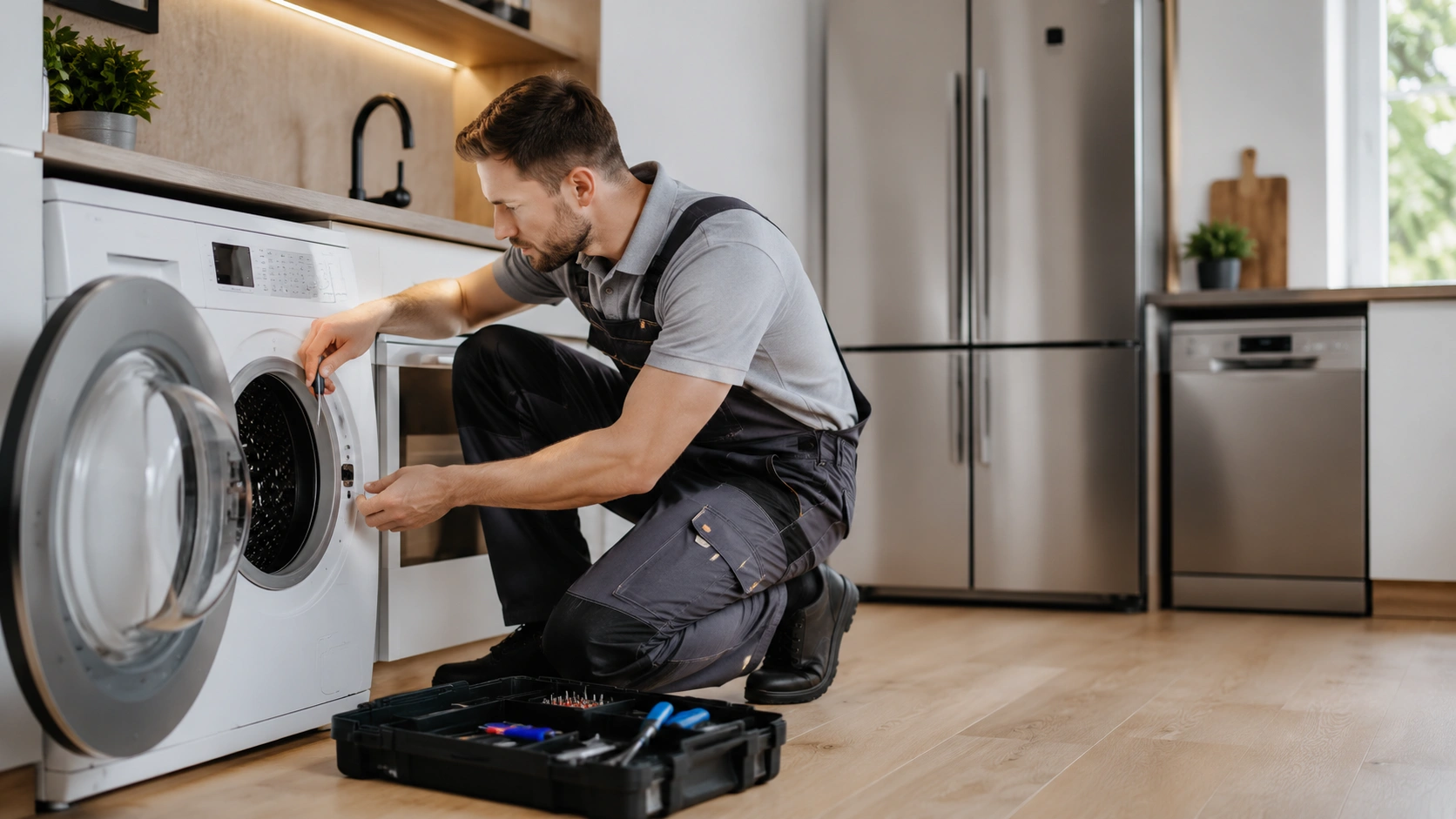
 4× more contacts
Appliance repair services · Poland
Google Ads
Google Ads for ecommerce works when campaigns earn revenue at a cost your margin can carry. We combine Google Shopping, Performance Max, Search and remarketing, and work on the feed, analytics and store UX alongside the ads.

A high ROAS does not automatically mean a profitable shop. ROAS ignores margin, shipping, returns, promotions and fulfilment costs, so we judge campaigns on profit as well as revenue. Good campaigns earn revenue at a cost that accounts for margin, returns, seasonality and customer lifetime value.
Double Digital is a Google Premier Partner 2026 (top 3% of Google Ads agencies in Poland). We combine Google Shopping, Performance Max, Search and remarketing, analyse results by product, category and market, and treat the feed, analytics and store UX as part of the scope. One team handles ads, feed, analytics and UX.
We analyse revenue, margin, returns and average order value, audit Google Ads, GA4, GTM and sales tracking, check Merchant Center and feed quality, split products by potential and profitability, look at the share of new and returning customers and set ROAS, cost-of-sale and priority goals.
Shopping and Performance Max are split by category and margin, Search covers brand, category and sales queries, and remarketing follows the funnel stage. We optimise titles, attributes and product data, prepare ads, graphics and video, and test conversions, feed and serving before scaling.
Budget moves towards the products and markets that sell at an acceptable cost instead of rising across the board. We scale bestsellers and high-margin items, cut spend on low-potential SKUs, test prices, promotions, feed and creative, optimise for new customers and repeat purchase value, and expand into new markets and categories.
Break-even ROAS is 100% divided by your margin. This uses gross margin, which excludes returns, order handling, packing and logistics. In high-return categories such as apparel, the real break-even can be tens of points higher, so set targets from your own data.
| Margin | Break-even ROAS | Target with buffer | What it means |
|---|---|---|---|
| 15% | about 670% | 800%+ | Very little room for error. Volume and repeat purchases matter |
| 20% | 500% | 600% | Targeting must be precise. Broad traffic is unlikely to pay off |
| 25% | 400% | 480% | Typical for electronics and price-competitive categories |
| 30% | about 333% | 400% | Room to test broader campaigns |
| 40% | 250% | 300% | Comfortable, with room to acquire new customers |
| 50% | 200% | 250% | Typical for private-label brands, with space to scale |
| 60% | about 167% | 210% | You can trade ROAS for market share on purpose |
Product ads with image, price and store name. The base of most shop accounts.
Learn moreMulti-channel automation that uses your feed, assets and conversion data. It needs clean data and product segmentation to be steered.
Learn moreBrand, category and problem-based queries, plus promotions. Brand and non-brand budgets are assessed separately, because brand traffic inflates results.
Learn moreSegmented by behaviour: category visitors, product viewers, cart adders, checkout starters, past buyers and lapsed users.
Learn moreBuild demand for a new brand or category with product demos, comparisons, reviews and seasonal content.
Learn moreWe manage Shopping campaigns through our own Comparison Shopping Service, Feedve. See how Shopping ads with a CSS work.
Learn moreMerchant Center passes product, price, availability, shipping and store data to Google. Errors limit serving or send people to outdated offers, so we monitor disapproved and limited products, price consistency with product pages, stock, shipping and return settings, identifier quality and domain alignment.
The feed is more than a product list. Titles, descriptions, images, categories, brand, identifiers and custom labels for margin, season or potential all shape what you can control, and it needs ongoing optimisation.
Segmenting your range is what makes performance measurable. Without it, one average number hides your winners and losers.
| Segment | How we run it | Risk if ignored |
|---|---|---|
| Sales drivers (bestsellers) | Target ROAS near break-even | Overspending on low-margin items |
| Margin products | Lower volume, high profit per unit. Target ROAS below the shop average | A target that is too tight chokes delivery |
| Brand and new arrivals | Maximise clicks or conversions with no hard ROAS target, to gain reach and early sales data | Judging them by bestseller metrics |
| To exclude | Low margin, frequent returns, stockouts or clearance items. No serving | Leaving them in the feed by default |
Passing revenue alone can push high-volume, low-profit products. We split campaigns by margin band, label products by profitability, set different ROAS goals per category and report high- and low-profit products separately. Even a basic split beats treating the whole catalogue the same.
Blended ROAS usually overstates performance, because returning customers would have bought anyway. We measure new-customer acquisition cost separately from returning-customer revenue, alongside repurchase frequency and the products that start the customer relationship.
Tracking needs transaction value, order ID, products, quantities and coupons. Typical faults are duplicate transactions, missing value or currency, thank-you page reloads counted as orders and gaps in consent management. Automated bidding scales spend on bad signals if tracking is wrong, and last click alone hides the role that video, Shopping, search and remarketing play in one purchase.
Budget depends on catalogue size, demand, CPC, margin, the number of markets and the sales target. Set the starting budget from the number of orders you need to evaluate the campaign, not from what you are willing to spend. A new campaign typically needs roughly €7 to €11 per day (PLN 30 to 50) to collect enough data. At a 2% conversion rate one sale needs about 50 clicks, so at a CPC of €0.34 (PLN 1.50) an order costs about €17 (PLN 75) in ads. That only pays off if the margin on the basket is higher.
Third-party benchmarks for the Polish market put Shopping clicks from about €0.11 (PLN 0.50) and Search clicks typically at €0.25 to €0.45 (PLN 1 to 2), with the most competitive queries above €10 (PLN 50). Treat them as orders of magnitude: CPC only means something next to conversion rate and average order value.
Raising the budget at the same target ROAS typically lowers ROAS, because the algorithm moves into more expensive and less relevant traffic once the best queries are used up. That is normal. Scaling means accepting a lower ROAS target for more volume, as long as it stays above break-even. We scale gradually and check stock, profitability, cost of sale and the share of new customers.
Ads bring the right people, but the product page closes the sale: clear photos and video, price and availability, shipping and returns information, reviews, simple variant selection and fast mobile performance. A higher conversion rate raises the value of the same traffic, so UX fixes can beat a bigger budget.
Campaigns should follow your sales calendar: seasonal peaks, new collections, Black Friday and holidays, clearance, price changes, stock levels and delivery times. Scaling out-of-stock products wastes budget. In new markets, each country needs its own analysis of product names, price competitiveness, shipping cost and time, payment methods, returns, language and feed, plus a separate budget and profitability assessment. Read more about our approach to ecommerce marketing.
Ads cannot fix persistent problems with price, stock, delivery or the purchase experience, but they show where your store is losing potential. A good starting point is:
€2.19M
in Google Ads sales over 7 months (January to July 2026) for one home and living store (PLN 9.57 million)
7.46
ROAS on about €293,000 of spend (PLN 1.28 million), with monthly spend scaled gradually from about €9,000 to almost €70,000 and about 20,000 attributed conversions
4,008%
ROAS in the summer season for Hotel Bania, and 2,875% in September and October
1,066%
ROAS for an apparel store, with sales up 280% and cost per acquisition down 40%
Trusted by leading brands


 4× more contacts
Appliance repair services · Poland
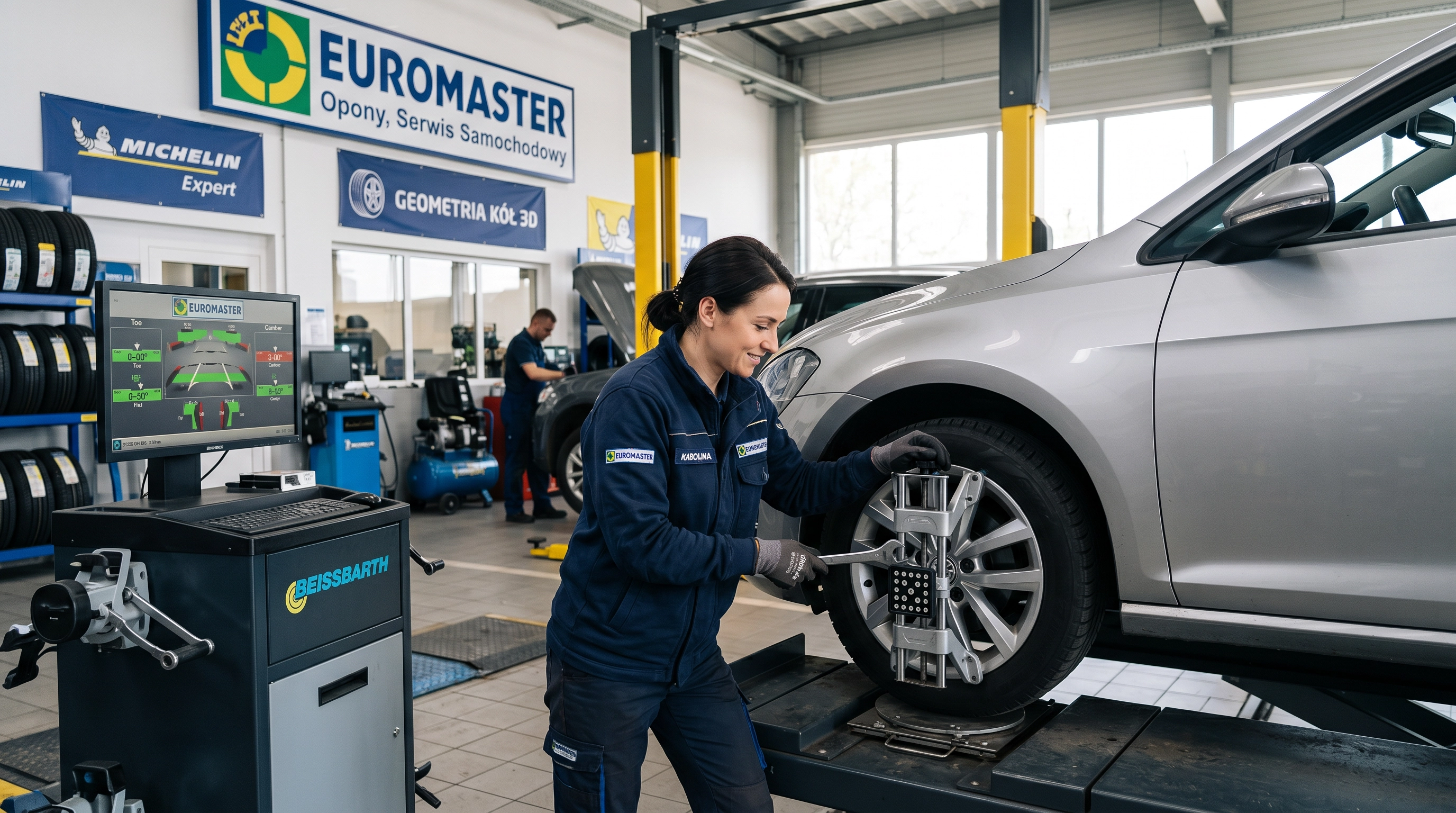 211 unique leads
Automotive services franchise
 4,008% ROAS
Hospitality · Poland
We will audit your account, feed and tracking, and show you where the profit is leaking and where you can safely scale.
Get a free auditPrivacy preferences
We use cookies and similar technologies to operate the site, measure performance and show relevant ads. Accept all, reject all or choose categories. You can change your choice at any time via “Cookie settings” at the bottom of every page. See our privacy policy.